How to add reverb to a video on iPhone
Open Videcho, import the clip, go to the Audio FX tab, pick a room in the Spatial card and drag Reverb to taste, then tap Export. The reverb goes on the sound of the video and the picture stays as it is. Your original clip is never changed.
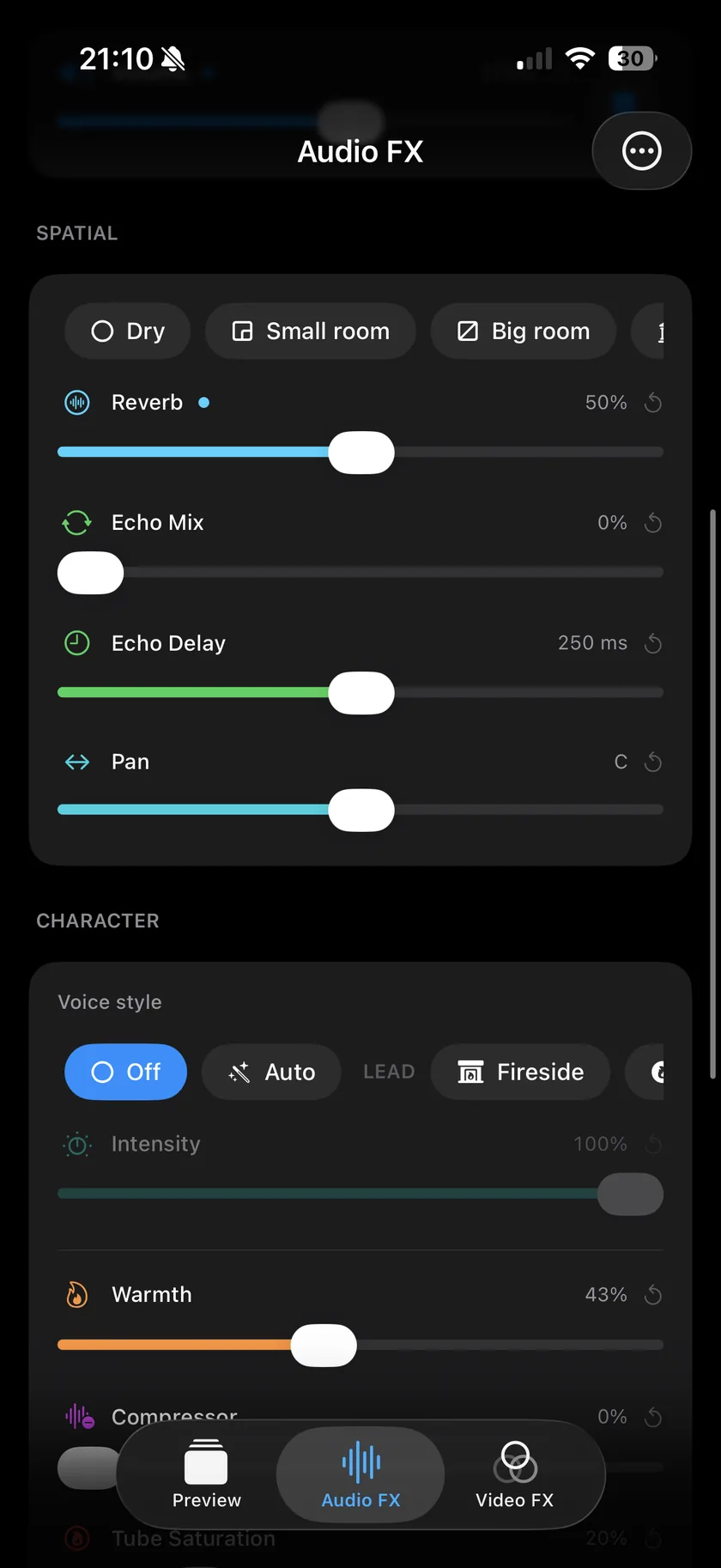
Videcho is on the App Store for iPhone and iPad. The guide names every button as the app shows it.
You need Videcho on an iPhone or iPad with iOS 26 or later, and a video in your photo library or in Files. The video needs a sound track.
-
Import the video
Open Videcho and tap Choose from Library. Pick Photo Library or Files, then choose the clip. Once a clip is open, the + button at the top left of the Preview tab loads a different one.
-
Open the Audio FX tab
Tap Audio FX in the bar at the bottom and scroll to the Spatial card. It holds the reverb and echo controls.
-
Pick a room
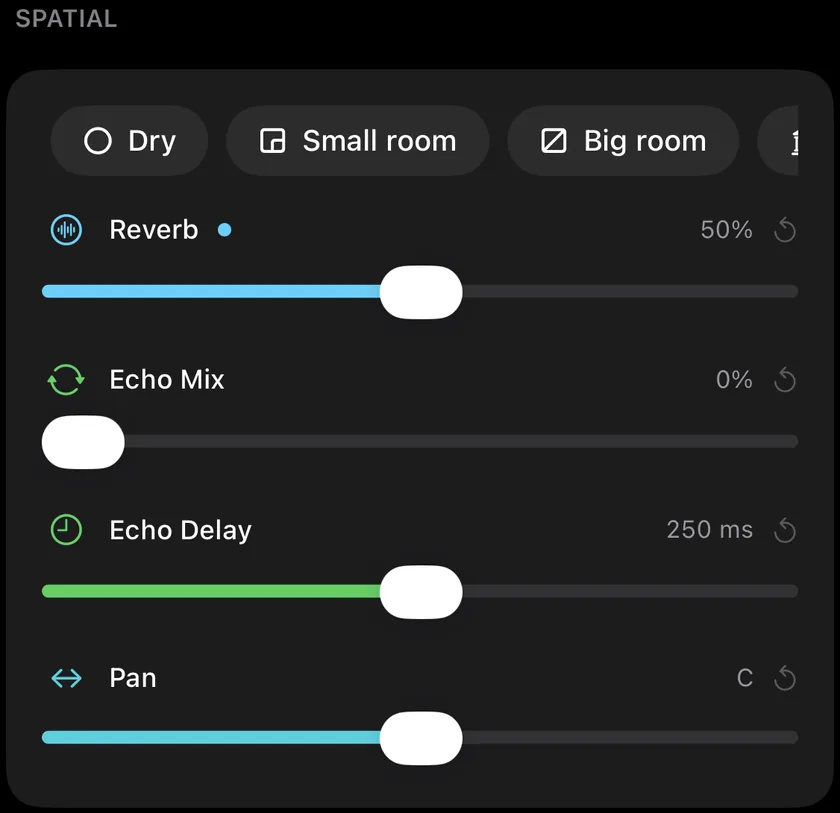
The row of presets at the top of Spatial sets reverb and echo in one tap, and it scrolls sideways. Small room, Big room and Hall add more and more reverb, from a little to a lot. Slapback is one short echo, Dub is a long echo with some hall and Ambient is a lot of reverb with a soft echo. Dry turns both off.
-
Set how much
Drag Reverb to set the amount. The percentage shows beside the name, and the circular arrow at the right sets it back. A small amount suits speech and a single instrument, and a slow song can take more. Play a loud part and a quiet part before you decide.
-
Add echo if you want it
Echo Mix sets how loud the repeats are, and Echo Delay sets the time between them, from 0 to 500 ms. Leave Echo Mix at 0% for reverb only.
-
Listen and compare
Tap play. The effect is live while the clip plays. On the Preview tab, the power button next to Export switches all effects off, so you hear the original, and on again.
-
Export
On the Preview tab, tap the Export button, the arrow out of a box at the top right. Videcho renders a new video at the size and frame rate of your clip, up to 4K at 60 fps, and opens the share sheet. Save the video to Photos or Files, AirDrop it or send it on. The original clip stays as it was.
-
What is the difference between reverb and echo?
Reverb is the dense wash of reflections that makes a sound seem to be in a room or a hall. Echo is a clear repeat of the sound after a short delay. Videcho has both, with separate controls, and you can use either one on its own.
-
Can I add reverb to only part of a video?
Yes, with keyframes. Play to the point where the sound should change, tap the diamond button next to the waveform and move the sliders. The new values apply from that keyframe until the next one, with a short fade. The guide to improving the sound shows it step by step.
-
Does the reverb change my original video?
No. Videcho writes a new video and leaves the original where it is.
-
Do I need an account?
No. Videcho needs no account, shows no ads and works on the clip on your device.
-
Can I add reverb to an audio file instead of a video?
Not in Videcho. It works on videos: it does not import a separate audio file and it does not export audio only.
-
Which iPhones can run Videcho?
Videcho needs iOS 26 or later and runs on iPhone and iPad.
Videcho adds reverb, echo, EQ, warmth and volume to the sound of a video on iPhone and iPad. It has no subscription and no account.
- How to make a video louder on iPhoneGuide
- How to improve the sound of a cover or music video on iPhoneGuide
- How to put a VHS or vintage look on a video on iPhoneGuide
- Videcho vs VideoVerbCompare
Written for Videcho 1.1.0. Button names are the ones the app shows.